
If your business relies on machinery, tools or specialist equipment, keeping everything in safe working condition is an important part of everyday operations. Whether you run a construction company, engineering business, manufacturing facility or maintenance service, equipment inspections help protect employees, prevent accidents and reduce unnecessary disruption.
However, arranging inspections is only part of the responsibility. Businesses also need to know what has been inspected, when examinations took place, whether any defects were identified and when further inspections are required. Keeping track of this information becomes increasingly difficult as the number of machines and equipment items grows.
Different types of equipment have different requirements. Some need regular visual checks, while others are subject to formal examinations under UK health and safety legislation. Understanding these differences and maintaining accurate equipment inspection records can help businesses improve safety, manage their responsibilities and avoid unnecessary operational problems.
Why Equipment Inspection Records Are So Important
Imagine arriving on a busy construction site and discovering that nobody can confirm when a particular item of lifting equipment was last thoroughly examined. The machinery might look perfectly serviceable and may have operated without problems the previous day, but its appearance alone cannot confirm that the necessary examination has been completed.
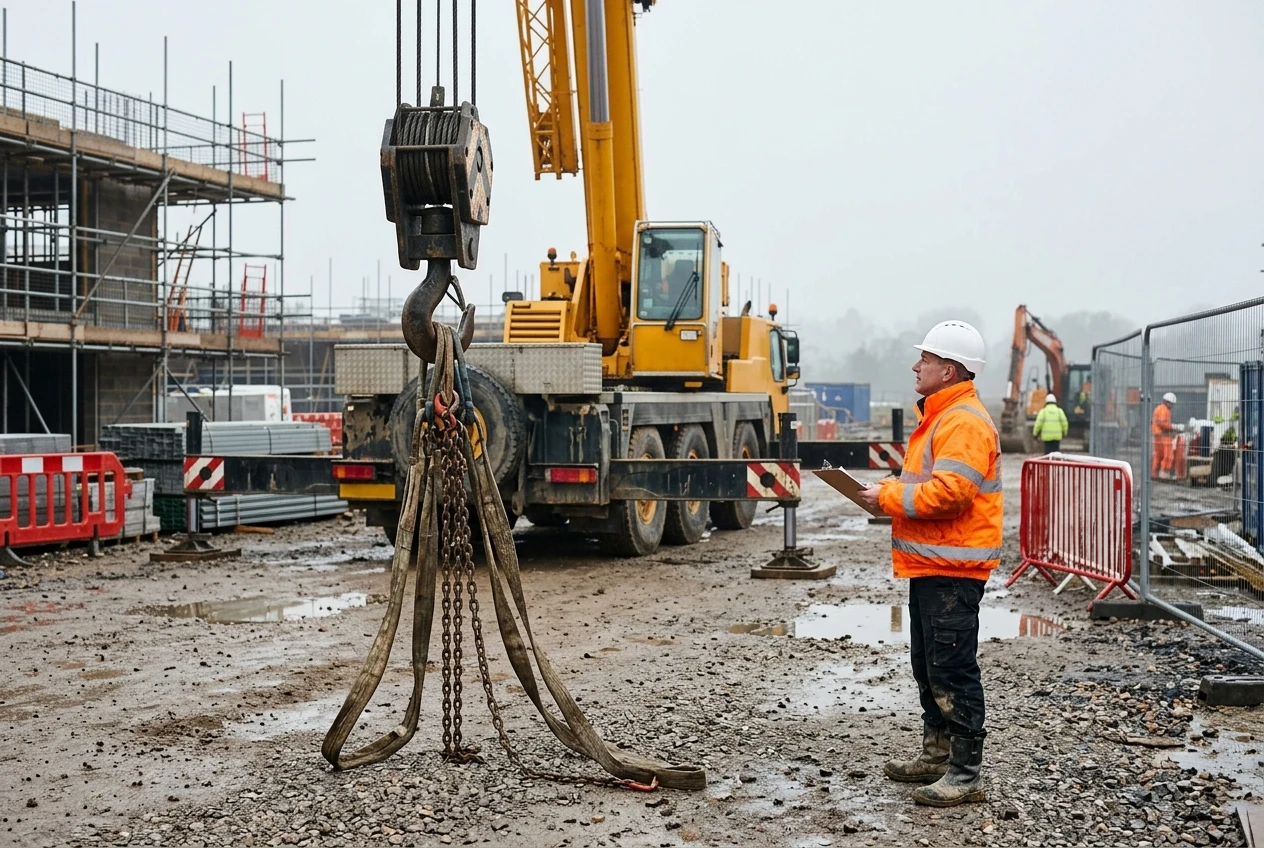
This is why equipment inspection records matter. They provide important information about an asset’s inspection history, condition and any defects identified during previous examinations. They also help managers understand whether equipment requires further attention before it can be used.
For businesses operating several machines, maintaining clear records can make everyday management considerably easier. Instead of searching through paperwork or contacting different employees to locate inspection reports, managers can refer to an organised equipment register.
Good inspection records also support better maintenance planning. If a particular machine develops recurring faults, its inspection history may help identify patterns and determine whether repairs, further investigation or replacement should be considered.
Ultimately, equipment inspection records are not simply paperwork created to satisfy regulations. They are practical management tools that can contribute to safer workplaces and more efficient business operations.
Understanding PUWER Regulations in the UK
One of the most important pieces of legislation governing workplace equipment in Great Britain is the Provision and Use of Work Equipment Regulations 1998, commonly known as PUWER. These regulations place duties on employers and others who own, operate or control equipment used at work.
PUWER requires businesses to ensure that work equipment is suitable for its intended purpose, maintained in a safe condition and inspected where necessary. The regulations also address employee training, protective measures and the safe operation of machinery.
The requirements apply to a wide range of equipment, from everyday workplace tools to complex industrial machinery. However, this does not mean every piece of equipment needs the same inspection schedule or a formal annual certificate.
According to the Health and Safety Executive, inspection requirements depend on factors such as the equipment itself, its operating environment, how it is used and the risks associated with deterioration. Some equipment may require straightforward visual checks, while machinery exposed to demanding conditions may need more detailed inspections.
For business owners, the important task is to understand which inspection requirements apply to their equipment and establish suitable arrangements for meeting them.
The Difference Between Equipment Maintenance and Inspection
Maintenance and inspection are closely connected, but they serve different purposes. Maintenance involves activities designed to keep equipment functioning safely and efficiently. These activities might include lubrication, replacing worn components, servicing machinery or repairing damaged parts.
Inspection, on the other hand, involves checking equipment to identify defects, deterioration or other conditions that could affect safety. An inspection might reveal damage to a component, while subsequent maintenance would involve repairing or replacing it.
A machine that receives regular servicing may still require separate inspections. Similarly, completing an inspection does not remove the need for ongoing maintenance or appropriate repairs.
For example, a contractor might regularly service a piece of machinery according to the manufacturer’s recommendations. However, if the equipment is also subject to specific inspection or examination requirements, those obligations must be addressed separately.
Businesses should therefore develop maintenance and inspection programmes that complement one another. Both activities contribute to keeping equipment safe, reliable and suitable for continued use.
Which Types of Equipment Require Inspection Records?
The types of equipment requiring inspection records vary according to the industry, working environment and applicable regulations. Construction companies commonly use lifting equipment, powered machinery, access equipment and specialist tools, while manufacturing businesses may operate production machinery, industrial equipment and complex mechanical systems.
Engineering companies often work with lifting accessories, machinery and equipment operating under demanding conditions. Facilities management businesses may be responsible for maintenance equipment, access equipment and machinery used across multiple properties.
Even smaller businesses can have important inspection responsibilities. A contractor operating only a handful of machines may still need to arrange particular checks or examinations.
However, not every item requires a formal inspection certificate. The appropriate arrangements should be determined by the risks involved, relevant legislation and manufacturer guidance.
A sensible approach is to create an equipment register identifying each asset, its location, relevant inspection requirements and associated documentation. This provides a useful starting point for managing equipment responsibilities consistently.
Understanding LOLER and Lifting Equipment Examinations
Businesses using lifting equipment must also consider the Lifting Operations and Lifting Equipment Regulations 1998, commonly referred to as LOLER. These regulations establish important requirements for lifting equipment used in the workplace, including certain cranes, hoists, lifting accessories and equipment used to lift people.
LOLER requires relevant lifting equipment to undergo thorough examination by a competent person at appropriate intervals. In general, equipment used to lift people and lifting accessories require thorough examination at least every six months, while other lifting equipment generally requires examination at least every twelve months.
Alternatively, equipment may be examined according to a suitable written scheme established by a competent person. Examinations may also be necessary in other circumstances, including after certain events or installations.
A thorough examination is different from routine maintenance. It involves a systematic assessment of relevant equipment and components to identify defects that could create dangerous conditions.
The competent person carrying out the examination must produce an appropriate written report. Businesses should maintain these reports according to the applicable retention requirements and take necessary action when defects are identified.
Understanding these responsibilities is particularly important for companies operating lifting equipment across construction sites, warehouses, factories and other commercial environments.
What Information Should an Equipment Inspection Record Contain?
An effective equipment inspection record should contain enough information to clearly identify the equipment, explain what was checked and establish whether further action is necessary. The exact information required depends on the inspection type and any applicable statutory reporting requirements.
For an ordinary equipment register, useful details include the equipment description, identification number, location, inspection date and the name of the person who carried out the inspection. The record should also describe relevant findings, identify any defects and include the next inspection or examination date where appropriate.
For example, a construction company might maintain records for several lifting machines, each with its own identification number, examination history and associated documentation. Having this information organised makes it easier for managers to understand the status of individual assets.
Formal examination reports under LOLER have specific legal content requirements, so businesses should not assume that a basic spreadsheet or equipment register can replace the required report.
Instead, a central register should be used to organise relevant information and make supporting documents easier to locate.
How Often Should Equipment Be Inspected?
One of the most common questions business owners ask is how frequently machinery and equipment should be inspected. Unfortunately, there is no single inspection interval that applies to every workplace or piece of machinery.
Under PUWER, inspection frequency should reflect the equipment, the environment in which it operates and the risks associated with deterioration. Equipment exposed to harsh weather, heavy workloads or particularly demanding conditions may require more frequent attention.
Manufacturer recommendations, previous inspection findings and relevant industry guidance should also be considered when establishing an appropriate schedule.
Some equipment may require checks before each use, while other machinery may need inspections at longer intervals. Equipment subject to LOLER or other specific legislation must also meet the relevant examination requirements.
Businesses should avoid choosing arbitrary inspection dates without understanding the actual requirements. Establishing appropriate intervals helps ensure that equipment receives the necessary attention without creating unnecessary administrative work.
How Renewal Radar UK Helps Businesses Manage Inspection Records
For businesses operating several pieces of equipment, keeping track of inspection dates, supporting certificates and maintenance documentation can quickly become a substantial administrative responsibility. As the number of assets grows, managing everything through spreadsheets and paper records becomes increasingly difficult.
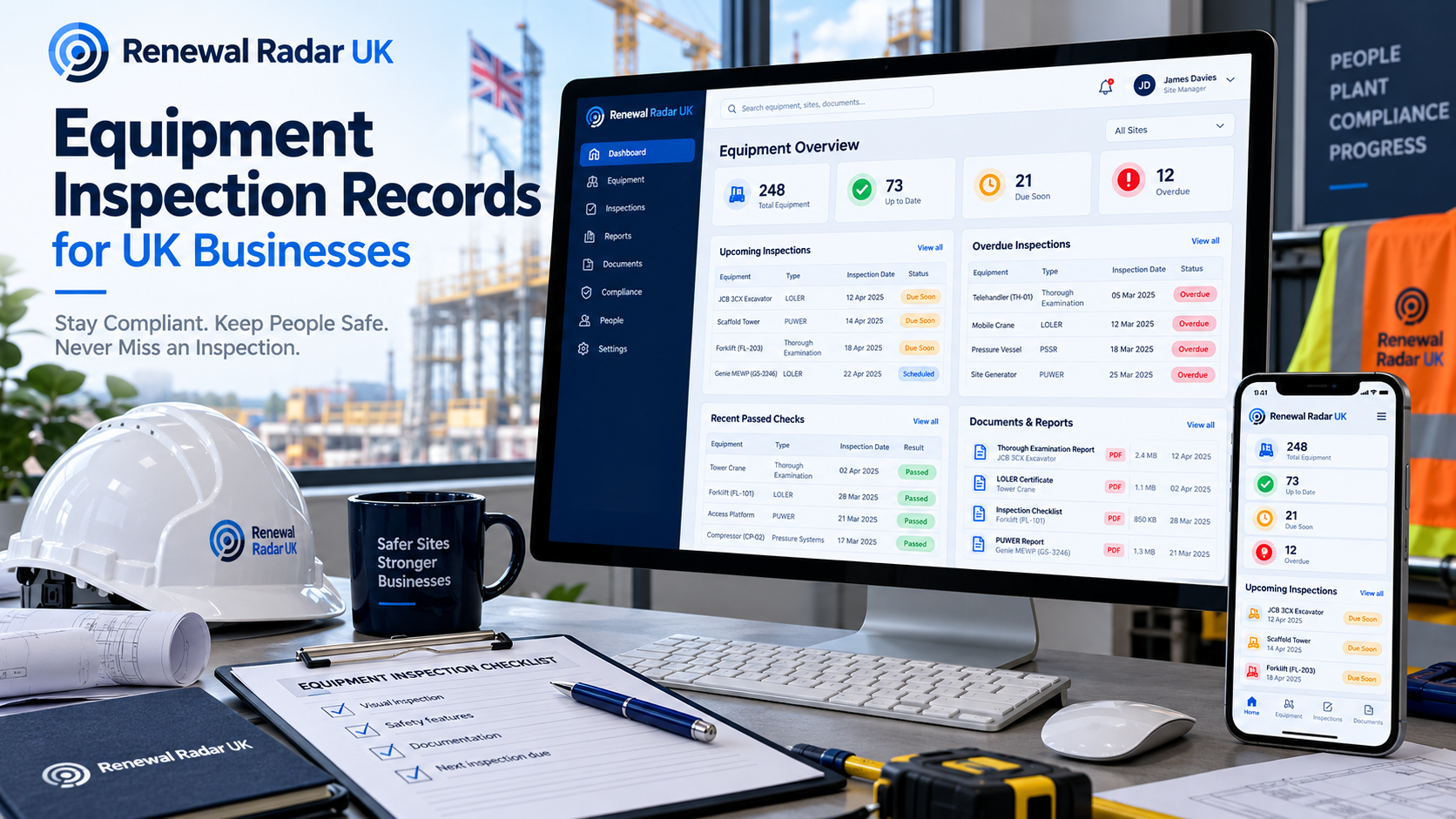
Renewal Radar UK has been developed to help businesses organise these responsibilities within one dedicated online platform. The application includes a Vehicles and Equipment management area where businesses can maintain relevant asset information and monitor important dates.
Its document management functionality provides a structured way to organise essential records, while the central dashboard gives users access to important business information. The Action Centre helps highlight overdue items, approaching expiry dates and missing information that may require attention.
This means businesses can manage equipment related records alongside other operational responsibilities, including workforce qualifications, insurance policies and important business documents.
Renewal Radar UK does not carry out inspections or replace competent examiners. Its purpose is to help businesses maintain better organisation and visibility over the records and deadlines associated with those responsibilities.
If your business is struggling to keep track of equipment inspections, certificates and important renewal dates, visit www.renewalradaruk.com and start your 14 day free trial. Discover how a central management system can make everyday administration simpler.
Why Accessible Equipment Inspection Records Matter
Equipment inspection records are only useful when the relevant information can be located and understood. Unfortunately, many businesses still store important reports in several different places, making them difficult to retrieve when needed.
A site manager might keep inspection certificates in a filing cabinet, while office staff maintain electronic copies and external inspection providers hold separate reports. When information is required urgently, finding the correct document can become frustrating.
Imagine a contractor preparing to begin work with lifting equipment. If the customer requests evidence of the latest thorough examination and the relevant report cannot be located, work may be delayed while employees search for the documentation.
A centralised digital record system can make this process more efficient by keeping important information organised and accessible to authorised personnel.
Businesses must also understand the applicable legal retention requirements. Under PUWER Regulation 6, inspection results must be recorded and retained until the next inspection is recorded. LOLER examination reports have different retention requirements depending on the equipment and circumstances.
Maintaining organised records can therefore support both operational efficiency and responsible management of statutory obligations.
Who Is Responsible for Equipment Inspections?
Responsibility for equipment safety often involves several individuals within a business. Employers and organisations controlling work equipment have legal duties to ensure that relevant safety requirements are met.
Managers may be responsible for organising inspection schedules, while equipment operators and maintenance personnel may carry out appropriate routine checks. However, anyone undertaking an inspection must possess the necessary competence for the task.
The level of knowledge and experience required depends on the complexity of the equipment and the nature of the examination. Certain routine checks can be completed by suitably trained employees, while statutory thorough examinations under LOLER require an appropriately competent person.
Businesses should establish clear responsibilities for arranging inspections, maintaining records and responding to defects. It is particularly important that inspection findings are reviewed and that necessary action is taken when safety concerns are identified.
Simply arranging an inspection does not mean a business has fulfilled every responsibility associated with the equipment.
Common Equipment Inspection Management Mistakes
One of the most common mistakes businesses make is assuming that regular servicing automatically satisfies all inspection requirements. Although maintenance is essential, certain equipment requires separate inspections or statutory thorough examinations.
Another frequent problem is incomplete documentation. An inspection report without a clear equipment identification reference can become difficult to associate with the correct machine, particularly when a company operates several similar assets.
Inspection dates can also be overlooked when equipment moves between locations or responsibility changes between employees. Businesses operating across multiple sites are especially vulnerable to this type of administrative confusion.
Another important mistake is failing to act on identified defects. An inspection report may highlight a problem, but the equipment can remain unsafe if appropriate corrective action is not taken.
Finally, relying on one person to remember every inspection date creates unnecessary risk. A consistent process with clear responsibilities, accessible records and regular reviews is generally more dependable.
Creating a Practical Equipment Inspection Register
Businesses can improve their equipment management processes by starting with a clear and accurate equipment register. The first step is to identify the machines, tools and specialist assets that require inspection, examination or routine review.
Each item should have a unique identification reference and relevant information about its location, purpose and inspection requirements. Managers should then determine the appropriate examination schedules using risk assessments, relevant regulations and manufacturer guidance.
Important dates should be recorded consistently, and responsibility for arranging inspections should be clearly assigned. Supporting certificates and examination reports should also be stored where authorised employees can retrieve them.
When inspections identify defects, businesses need appropriate procedures for arranging repairs, recording corrective actions and preventing unsafe equipment from being used.
The register should be reviewed regularly to ensure that new equipment is included and existing information remains accurate.
This approach does not require unnecessarily complicated processes. What matters is maintaining a reliable system that helps businesses understand their responsibilities and act when necessary.
Better Inspection Management Supports Better Business Performance
Good equipment inspection management provides benefits that extend beyond satisfying legal requirements. Reliable records help managers understand the condition of their assets, identify recurring problems and plan maintenance activities more effectively.
For businesses operating across several sites, organised records can also improve communication between managers, equipment operators and external inspection providers.
Knowing when examinations are due allows businesses to plan appointments around operational commitments. This can help reduce avoidable disruption and prevent important inspections from being overlooked during busy periods.
Accurate equipment records can also support purchasing and replacement decisions. A machine that repeatedly requires expensive repairs may need further investigation or replacement, while a reliable maintenance history can provide useful information about an asset’s condition.
Although no management system can guarantee that equipment will remain safe, organised inspection records are an important part of responsible asset management.
Equipment Inspection Status Overview
Example business with 40 inspection records
Stay Ahead of Important Inspection Dates
Renewal Radar UK helps you track equipment records and upcoming deadlines.
Illustrative data only. Inspection status reflects recorded dates and does not establish legal compliance or equipment safety.
Take Greater Control of Your Equipment Inspection Records
Managing equipment inspections should not involve constantly searching for reports, chasing certificates or worrying about forgotten examination dates. Whether your company operates a small collection of tools or a substantial range of machinery, having a clear inspection management process can make everyday responsibilities easier to handle.
Understanding PUWER and LOLER requirements, maintaining accurate documentation and establishing appropriate inspection schedules are important steps towards better equipment management. Combining these practices with a central record system can provide greater visibility over your assets and their associated responsibilities.
Renewal Radar UK offers businesses a practical way to organise equipment information, monitor important dates and manage essential documents through one online application. Its Vehicles and Equipment section, central dashboard, document management tools and Action Centre help users maintain better control over important business records.
Start Your 14 Day Free Trial of Renewal Radar UK
If you want a simpler way to manage equipment inspection records, employee qualifications, insurance renewals and other important business deadlines, Renewal Radar UK is designed to help.
The platform is available for just £49 per month, or you can choose the £490 annual subscription and save £98 compared with paying monthly for twelve months.
You can explore the application with a 14 day free trial, giving you the opportunity to experience its features and decide whether it suits your business.
Visit www.renewalradaruk.com today and discover how better organisation can help you stay ahead of important business responsibilities.
Renewal Radar UK. Important Records. Clearer Deadlines. Greater Control.
All the best!
Eamon