
Being asked to produce important business documents at short notice can create a surprising amount of pressure. A customer might request insurance certificates before awarding a contract, a principal contractor may ask for employee qualification records, or an internal manager could need evidence of equipment inspections before an important review. Even when the documents exist, finding the correct information can be difficult if records are scattered across several locations.
For many businesses, the problem is not that they have neglected record keeping altogether. They may have accumulated considerable documentation over the years, including training certificates, inspection reports, insurance policies and other important records. The difficulty lies in knowing which versions are current, where the documents are stored and whether any associated expiry dates have been overlooked.
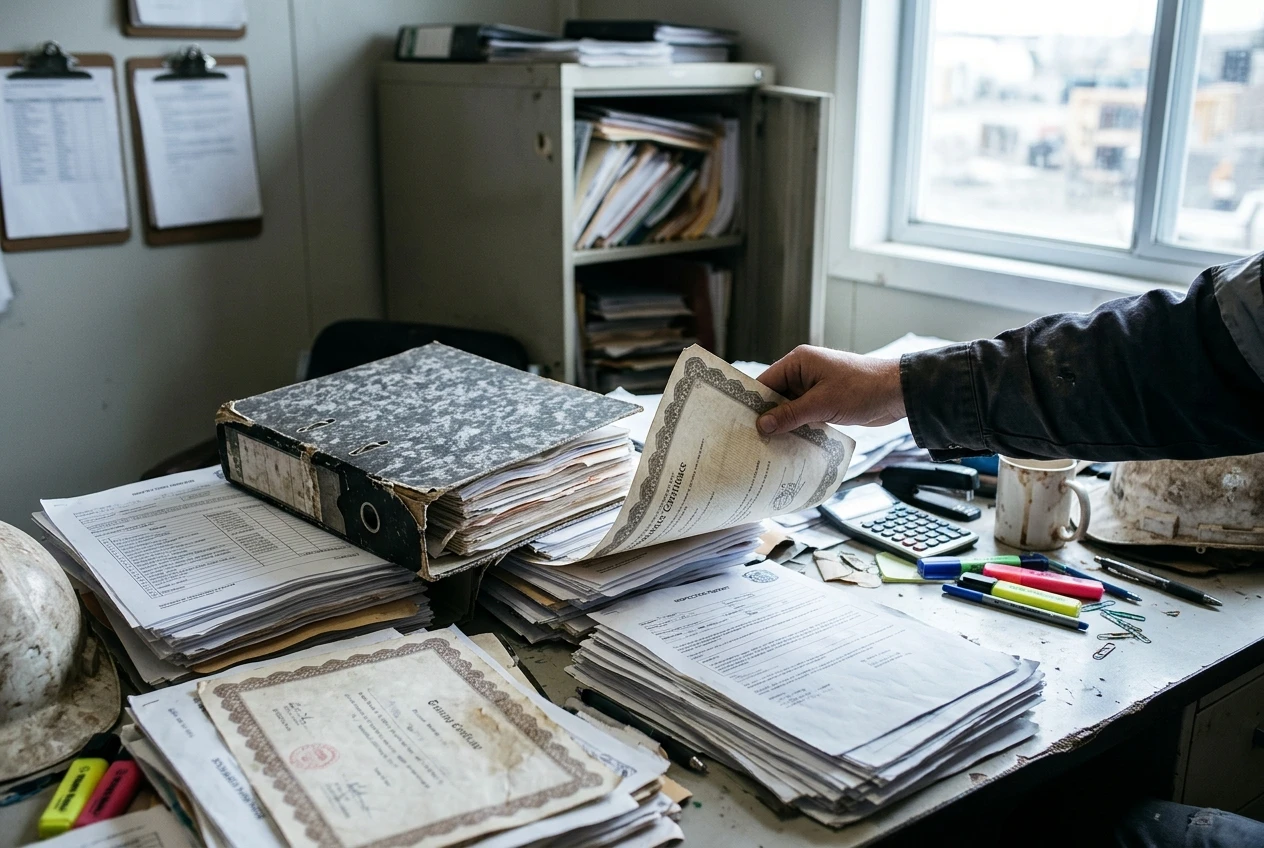
Preparing business records for compliance audits is therefore about much more than gathering paperwork when an inspection or review is approaching. It involves creating a consistent system for maintaining information throughout the year so that relevant documents can be located and reviewed when needed.
Construction companies, engineering firms, facilities management businesses and maintenance contractors can all benefit from a more organised approach. These organisations frequently manage records associated with employees, equipment, vehicles and business operations, making it particularly important to maintain reliable information.
A central record management system can help businesses improve visibility over the documentation they hold and identify areas that may require attention before an audit takes place.
Why Organised Compliance Records Matter
Compliance audits and business reviews can serve several purposes. Some are carried out internally to assess whether company procedures are being followed, while others may be undertaken by customers, principal contractors, certification bodies or relevant authorities.
The records required will depend on the nature of the review and the responsibilities applying to the business. A construction contractor might need to produce evidence of employee training and particular equipment examinations. A facilities management company could be asked about insurance documentation, contractor records and relevant inspection reports. An engineering business may need to demonstrate how it maintains information relating to machinery or specialist qualifications.
When relevant documents are organised and accessible, responding to these requests becomes more straightforward. Managers can locate information, review its contents and identify whether anything further is required.
When documents are scattered across email accounts, spreadsheets and filing cabinets, the same process can involve considerable searching. Employees may need to contact colleagues, locate older files and establish whether a more recent version exists.
This creates unnecessary administration and can make a business appear less organised than it actually is.
Maintaining accurate records throughout the year helps reduce these difficulties, although the presence of documentation alone does not establish that every compliance requirement has been met.
The Difference Between Storing Documents and Managing Records
A business may have an extensive collection of documents without having an effective record management system.
For example, an employee qualification certificate could be stored in a personnel folder, while its expiry date is recorded separately in a spreadsheet. An equipment inspection report might be held by a site supervisor, with another copy saved on an office computer. Insurance documents may be stored in emails exchanged with a broker.

Where reviews involve contractors, a consistent method for supplier certificate and agreement tracking can make supporting evidence easier to locate.
Although the information exists, there is no guarantee that it is easy to locate or that all the records remain current.
Effective record management involves understanding what information the business needs, maintaining it in a consistent location and monitoring relevant dates or responsibilities associated with each document.
This distinction becomes particularly important when records are requested during an audit. The business needs to know not only where a document is stored, but also whether it relates to the correct employee, vehicle, piece of equipment or operational activity.
A central system can support these arrangements by bringing records and associated information together.
The aim is to make important documentation part of normal business administration rather than something employees search for only when a request arrives.
Identifying Which Records Your Business Needs
Different industries have different documentation responsibilities, and businesses should avoid assuming that one standard list of certificates applies to every organisation.
A construction company may need records associated with employee training, equipment examinations and insurance arrangements. A manufacturing business might maintain information relating to machinery, technical qualifications and workplace inspections. A facilities management company could have responsibilities involving contractor records, building related inspections and specialist maintenance documentation.
Some requirements arise from legislation, while others may be established by customer contracts, industry standards or internal company procedures.
The starting point is to understand which records are relevant to the activities undertaken by the business.
Managers should consider the employees, equipment, vehicles, contracts and other operational areas for which documentation needs to be maintained. Relevant legal or professional guidance may be necessary when deciding exactly which records are required.
Once those responsibilities have been identified, the associated information can be organised into appropriate categories.
This makes it easier to establish a consistent filing process and reduces the likelihood of important documents becoming mixed with unrelated paperwork.
Employee Qualifications and Training Records
Employee qualifications are frequently relevant during business reviews, particularly where workers undertake specialist activities or operate equipment that requires particular skills and knowledge.
A construction contractor may need to demonstrate that workers have undertaken relevant training, while an engineering company could maintain records of technical qualifications and professional certifications. Maintenance businesses may also have employees with different training requirements depending on their roles.
These records can help managers understand which qualifications have been obtained and whether particular certificates require renewal.
However, holding a certificate does not necessarily establish that an employee is competent to undertake every relevant task. Competence can also depend on experience, practical skills, supervision and other circumstances.
Businesses must therefore understand the actual requirements associated with the work being performed rather than relying exclusively on the existence of a document.
For administrative purposes, maintaining accurate qualification records makes it easier to identify the relevant certificates and locate supporting evidence when requested.
Recording expiry dates where applicable can also help managers identify when further training, reassessment or other action may need to be considered.
Equipment Inspection Records and Supporting Evidence
Businesses that operate machinery, tools and specialist equipment may need to maintain records of inspections or examinations, depending on the equipment and the relevant requirements.
For example, certain lifting equipment is subject to examination requirements under applicable regulations, while other workplace equipment may require inspections based on its use, condition and operating environment.
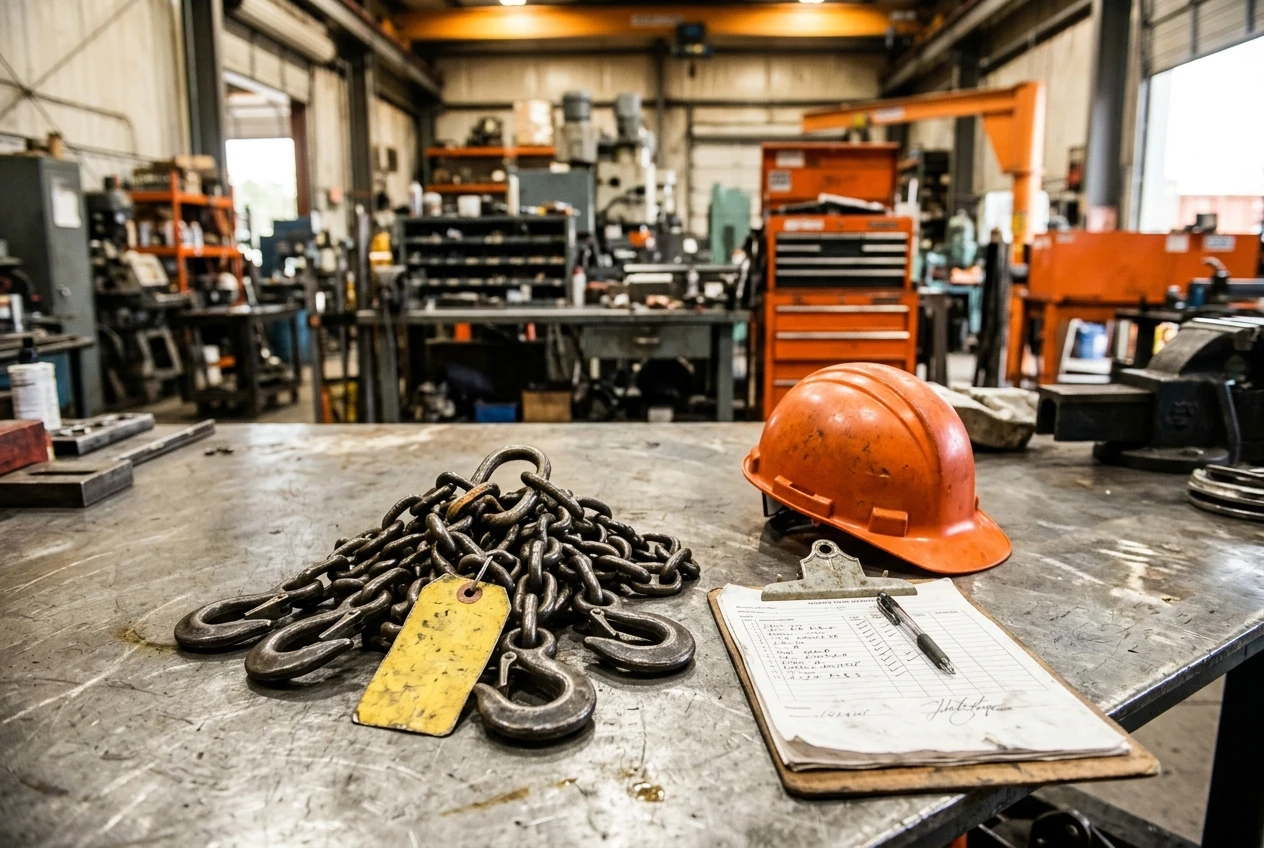
The appropriate arrangements vary, and not every piece of equipment requires the same form of certificate or inspection schedule.
Where records are required, they should be maintained accurately and made accessible to the people responsible for managing the equipment.
During an audit or review, a manager may need to locate evidence of an inspection, identify the relevant equipment or confirm when further attention is required.
If reports are held across several sites or stored by different employees, gathering this information can become difficult.
A central record system can help by organising the associated documents and dates, allowing managers to identify which records are available and which may require updating.
It is important to remember that storing an inspection certificate does not replace carrying out the inspection itself or addressing any defects identified.
Record management supports the administrative process, while the business remains responsible for meeting the applicable safety requirements.
Insurance Documentation and Business Certificates
Insurance records are another common category of documentation requested during customer reviews and commercial assessments.
A principal contractor may ask for evidence of relevant liability insurance before work begins, while a commercial customer could require information about particular policies as part of its supplier approval arrangements.
Businesses may also need to maintain professional certificates, licences or other documents associated with their activities.
These records can have different renewal dates, and some may be updated several times during an ongoing customer relationship.
A common administrative problem occurs when a policy has been renewed but the latest certificate has not been saved in the business’s main records. The company may have appropriate arrangements in place but still struggle to produce current evidence when requested.
Keeping documentation organised and recording relevant expiry dates helps reduce the likelihood of this situation.
Managers should ensure that records reflect the latest available information and that documents are reviewed when circumstances change.
This does not determine whether the insurance or certification is suitable for the business, but it supports the process of maintaining accessible evidence.
Identifying Missing and Expired Records
One of the most useful aspects of regular record reviews is the opportunity to identify information that is incomplete or outdated.
An employee may have completed training but not supplied the relevant certificate to the office. An equipment inspection may have taken place without the latest report being added to the company’s records. An insurance policy could have renewed, while the previous document remains on file.
These situations are not always discovered during everyday operations because employees may assume that the information is already available.
An audit can expose these administrative gaps, creating unnecessary pressure to locate or update the missing documentation.
Businesses can reduce this problem by reviewing important records regularly instead of waiting until a formal request arrives.
Expiry dates should be monitored where relevant, and missing documents should be identified so that the responsible person can investigate.
A central system makes these reviews easier because information can be assessed through a more consistent process.
It is important, however, to distinguish between a missing record and an underlying compliance failure. The absence of a document from an application does not necessarily mean that the required activity has not taken place, just as the presence of a document does not automatically demonstrate compliance.
The purpose of record tracking is to improve visibility and support appropriate follow up.
Assigning Responsibility for Compliance Documentation
Good record management depends on clearly defined responsibilities.
In a small company, one person may maintain most of the relevant documents. A larger business could have separate employees responsible for workforce qualifications, equipment inspections, insurance policies and vehicle records.
These arrangements can work effectively, provided that everyone understands their role and information is maintained consistently.
Businesses with company vehicles should also keep their MOT and insurance expiry records up to date as part of routine documentation checks.
Problems arise when employees assume that another department is handling a particular responsibility.
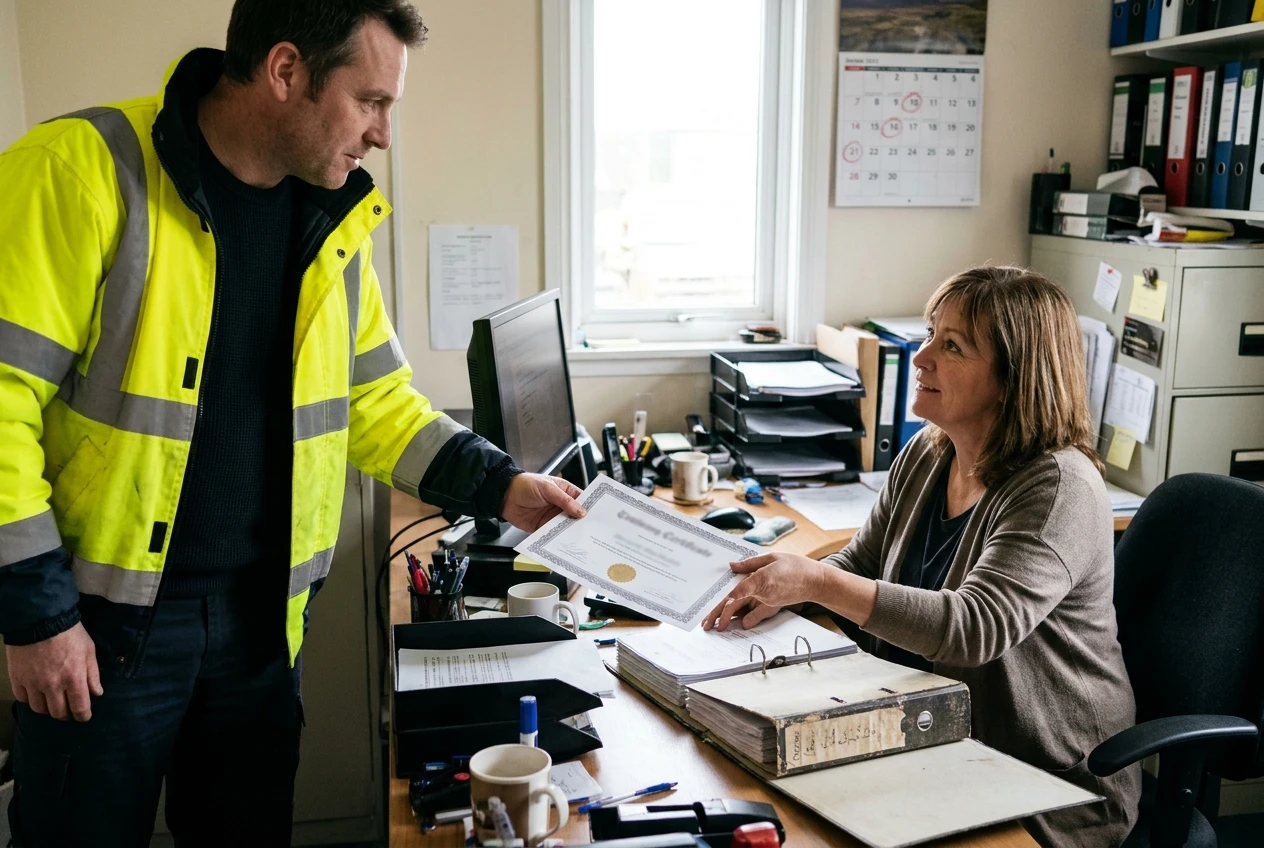
For example, a manager may believe the office administrator has received an updated qualification certificate, while the administrator is waiting for the manager to provide it. Without a clear process, the record may remain incomplete.
Businesses benefit from establishing who is responsible for maintaining each category of information and how updates should be communicated.
When an employee completes new training, the appropriate records should be updated. When an inspection report is issued, it should be made available to the person maintaining the equipment information.
These practices help prevent important documentation from becoming fragmented across different employees and departments.
How Renewal Radar UK Supports Audit Preparation
Renewal Radar UK provides a central application for managing business records and monitoring important expiry dates. Its features are particularly relevant to businesses maintaining information associated with employees, vehicles, equipment and company documentation.
The application includes a Compliance Centre that provides visibility over key records and responsibilities. The Action Centre helps users identify information that is overdue, approaching expiry or missing, making it easier to recognise areas requiring attention.
Businesses can organise employee qualifications, equipment related documents, vehicle records and other important information within the platform.
Renewal Radar UK also includes a Compliance Matrix, reporting facilities, Compliance Packs and an Audit Trail. These features can support internal reviews and help businesses organise records when information needs to be presented or examined.
For a company preparing for an upcoming customer audit, having relevant documents and associated dates available in one system can make the administrative process more manageable.
The software does not carry out statutory inspections, issue compliance certifications or guarantee that a business satisfies every legal requirement. Those responsibilities remain with the organisation and any relevant qualified professionals.
Its purpose is to help businesses maintain better visibility over important records and identify administrative matters that may require attention.
If your business regularly needs to produce certificates, inspection records and other evidence, you can explore Renewal Radar UK through a 14 day free trial at www.renewalradaruk.com.
Establishing a Regular Record Review Routine
Preparing for audits becomes easier when important records are maintained throughout the year.
Rather than waiting until a review is scheduled, businesses should establish a regular process for checking the information they hold. This may involve reviewing expiry dates, identifying missing documents and confirming that records reflect the latest available information.
The routine should be appropriate to the size and activities of the organisation.
A small contractor may be able to review important records personally, while a larger company could divide responsibilities between several managers.
What matters is that record keeping becomes a consistent part of administration.
When documents are renewed or new certificates are issued, the associated information should be updated promptly. If a document is missing, somebody should be responsible for investigating the issue.
Regular reviews can also help businesses identify recurring administrative problems, such as particular records frequently being updated late or information being stored inconsistently.
Addressing these issues gradually is usually easier than attempting to correct everything shortly before an audit.
How Better Records Support Everyday Business Operations
The benefits of organised compliance records extend beyond formal reviews.
Managers often need accurate information when assigning employees to work, planning equipment inspections or responding to customer requests.
A construction supervisor may need to check whether relevant qualification records are available before arranging particular work. A facilities manager might need to locate an inspection report when discussing a maintenance issue. An office administrator could be asked for insurance documentation before a new contract begins.
These are everyday situations in which accessible records can save time and reduce unnecessary confusion.
A central system also helps businesses maintain continuity when employees change roles or leave the organisation. Important information is less dependent on one person’s knowledge of where documents are stored.
As companies grow, this becomes increasingly valuable.
Better record visibility does not replace sound operational procedures, but it supports the people responsible for carrying them out.
Preparing Records for Customer and Contractor Reviews
Customer audits and contractor assessments can create particular pressure because businesses may need to provide information within a specified period.
A company tendering for work might be asked to supply several different documents. An existing customer may request updated certificates as part of a routine review, while a principal contractor could need evidence relating to employees or equipment involved in a project.
Where the relevant records are organised, employees have a clearer starting point for gathering the information.
This can help businesses respond more efficiently and reduce the amount of time spent searching for documents.
It is still important to review the specific request carefully. Different customers may have different requirements, and the fact that a document is available does not necessarily mean it is the correct evidence for that particular assessment.
Businesses should verify the information they provide and ensure that the documentation is appropriate to the request.
A tracking system supports this process by making records easier to locate and review.
Maintaining Accurate Records as the Business Grows
As a company expands, its documentation responsibilities can become considerably more demanding.
Additional employees may require different qualification records, new equipment introduces further inspection responsibilities and more vehicles create additional renewal dates. New contracts and suppliers may also bring their own documentation requirements.
A record management process that worked well for a business with five employees may become difficult to maintain when the workforce grows to thirty or more.
This is often when businesses discover the limitations of relying on individual spreadsheets and informal reminders.
A central system can provide a more consistent approach, helping managers maintain an overview as the volume of information increases.
However, the reliability of the records still depends on the business maintaining them properly. New documents need to be entered, changes should be reflected promptly and outdated information must be reviewed.
The most useful systems are those that support sensible administrative habits rather than encourage employees to collect information without maintaining it.
A More Reliable Approach to Audit Preparation
Good audit preparation begins long before an audit is scheduled. Businesses that understand their documentation requirements and maintain accurate records throughout the year are generally better positioned to respond when information is requested.
A practical process involves identifying the important records, organising them consistently, assigning responsibility for maintaining them and reviewing relevant dates regularly.
This approach can reduce last minute searching and help managers recognise administrative gaps while there is still time to investigate.
For organisations managing employees, vehicles, equipment and multiple categories of business documentation, keeping the information in one system can provide greater visibility.
Renewal Radar UK supports this process through its dedicated management areas, compliance tools and reporting features.
Its value lies in making relevant information easier to organise, monitor and review, while the business retains responsibility for meeting the requirements that apply to its operations.
Take Control of Your Business Compliance Records
Preparing for a compliance audit should not require a company to spend days searching through unrelated folders and contacting employees for documents that should already be accessible.
Maintaining organised records throughout the year provides a more practical approach and helps businesses understand which information is available when it is needed.
Renewal Radar UK brings important expiry dates and business records into one central workspace, supporting the administration of employee qualifications, equipment inspections, vehicle documentation and other responsibilities.
Start your 14 day free trial at www.renewalradaruk.com and discover how Renewal Radar UK can help your business maintain clearer, more organised records.
Subscriptions cost £49 per month or £490 annually, saving £98 compared with twelve monthly payments.
All the best!
Eamon